
How is Ube Powder Produced?
The Journey of Mor Yam from Field to Dust
Gaining popularity worldwide in recent years, especially thanks to social media, ube is a root vegetable that stands out with its vibrant purple color and unique aroma.
Used in many different recipes, from ube lattes and ice cream to cakes and smoothies, ube powder is actually the result of a rather laborious production process.
So how exactly is ube powder produced? How does it retain its purple color? What methods are used in industrial production? What are the differences between high-quality ube powder and low-quality product?
This article will examine the ube powder production process in detail.
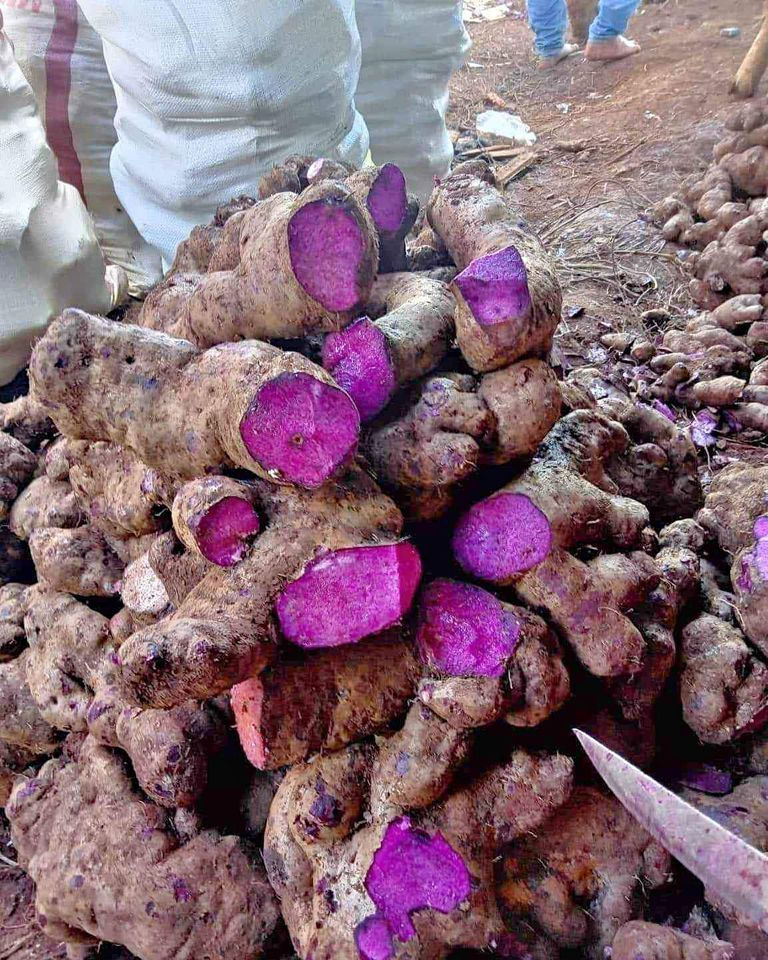
What is Ube?
Ube, scientifically known as Dioscorea alata, is a species of tropical yam.
Although it is generally associated with the Philippines, it is also grown in different regions of Southeast Asia.
Although it resembles a sweet potato at first glance, it is actually a different plant.
Ube's characteristic features:
Intense purple color
Light vanilla aroma
Sweet and nutty flavor
Starch-rich structure
Natural anthocyanin pigments
The source of this purple color is natural plant pigments called anthocyanins. These same pigments are also found in blueberries, purple cabbage, and blackberries.
Why is Ube powder produced?
Fresh ube has a very short shelf life.
Moreover:
It is difficult to carry.
Importing it is costly.
It may not be available throughout the year.
It takes time to prepare it for use.
Therefore, manufacturers dry ube and convert it into powder form.
Product in powder form:
It can be stored for a longer period of time.
More portable
It can be used more practically in recipes.
It becomes more stable in terms of aroma and color.
Where does the production process begin?
The secret to a high-quality ube powder actually begins in the field.
The harvested tubers:
Having reached full maturity
Showing no signs of decay
Low fiber content
It needs to have an intense purple color.
Underdeveloped tubers have a paler color.
Excessively mature tubers can develop a fibrous structure.
Therefore, producers usually harvest at the end of the 8-10 month growing season.
1. Cleaning and Sorting
The harvested tubers are first washed.
At this stage:
Soil
Sand
Stone pieces
Root remnants
completely removed.
In industrial facilities, this process is carried out using rotary brush cleaning systems.
The cleaning stage is extremely important because a large portion of the microbiological risks that may arise in subsequent processes are prevented here.
2. Peeling Process
The cleaned tubes are peeled.
The shell part generally:
It is harder.
It is more fibrous.
May contain undesirable flavors.
Therefore, it is not included in the final product.
High-quality producers strive to separate the shell with minimal loss because some of the purple pigments are located near the surface.

3. Slicing
The peeled tubers are cut into thin slices.
This process:
Reduces drying time.
It provides more uniform moisture loss.
Improves color stability.
Typical slice thickness:
It is between 2–5 mm.
Pieces cut too thickly won't dry evenly.
Cutting the pieces too thinly can lead to a loss of flavor.
4. Blanching
This is one of the most critical stages in producing high-quality ube powder.
The slices are briefly treated with hot water or steam.
This process:
It inactivates enzymes.
Reduces color loss.
It slows down oxidation.
It reduces microbial load.
If this step is not done correctly, the purple color may turn brown during drying.
5. Drying Process
This is the most important part of the job.
Because the final product:
Color
Aroma
Resolution
Shelf life
It largely depends on the drying method.
Hot Air Drying
It is the most common method.
Generally:
50–65°C
It is applied between them.
Advantages:
It is economical.
Suitable for large-volume production.
Disadvantages:
Some loss of flavor may occur.
Color vibrancy may decrease.
Vacuum Drying
It operates at lower temperatures.
This method:
It preserves aroma better.
It gives a brighter purple color.
However, it is expensive.
Freeze Dry
This is the method used in premium ube powders.
The product is first frozen.
Then, under vacuum, the ice is directly vaporized.
Advantages:
Maximum color preservation.
Maximum aroma preservation.
Higher nutritional value
The disadvantage is that it is extremely expensive.
Therefore, most ube powders on the market are not freeze-dried.
6. Grinding
Once completely dried, the slices are ground in mills.
The goal at this stage is:
Homogeneous particle size
Easy resolution
Smooth texture
to obtain.
A good ube powder:
It does not clump.
It is fluid.
It is a homogeneous purple color.
7. Selection and Standardization
The ground product is passed through sieves.
Thanks to this process:
Large pieces are separated.
Powder fineness becomes standard.
Professional manufacturers strive to achieve the same particle size in every batch.
8. Packaging
Ube powder's biggest enemies:
Moisture
Light
Oxygen
It is accepted as such.
Therefore, quality producers:
Aluminum barrier packaging
Nitrogen gas application
Light-impermeable packages
They use them.
Properly packaged ube powder can maintain its quality for 12–24 months under suitable conditions.
How to Identify High-Quality Ube Powder?
In a quality product:
✓ Features a vibrant purple color.
✓ No clumping observed.
✓ A vanilla-like and slightly nutty aroma is noticeable.
✓ No artificial dye odor.
✓ Easy to mix
✓ No bitterness is felt.
Why do some Ube powders appear much more purple?
This is an important point.
Some products on the market:
Purple sweet potato
Natural pigment extracts
Colorants
It can be supported by...
Therefore, a very intense neon purple color doesn't always mean a higher quality product.
True ube usually displays more natural and softer purple tones.
Where is Ube powder used?
Ube powder is an extremely versatile material.

In beverages
Ube Latte
Ube Iced Latte
Smoothie
Milkshake

In pastry making
Cake
Cookie
Cheesecake
Muffin
Macaron
In ice cream
Ube Ice Cream
Gelato
Frozen Yogurt
Breakfast Recipes
Pancake
Waffle
Oatmeal
In Modern Gastronomy
Mousse
Cream
Foams
Sweet sauces
Fine dining presentations
Conclusion
Ube powder is not simply a dried vegetable. Achieving a high-quality product requires a combination of proper harvesting, careful processing, controlled drying, and precise grinding.
Especially in terms of color and aroma preservation, the drying method is the most critical factor determining the final product quality.
Today, ube's rising popularity worldwide stems not only from its striking purple color but also from its unique vanilla flavor and versatile uses.
Properly produced ube powder has become an indispensable ingredient in creative recipes, both in professional kitchens and for home use.


Comments